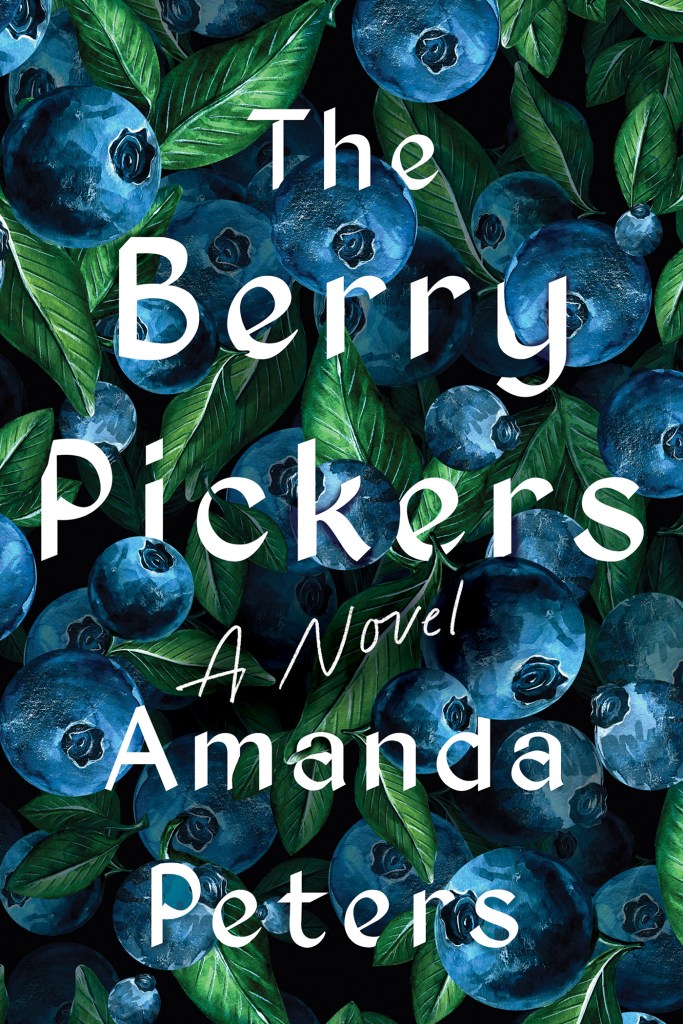
The Berry Pickers
By: Amanda Peters
Genre: Fiction, Historical Fiction
Number of Pages: 307
Published: October 31, 2023 (1st Published April 4, 2023)
Publisher: Catapuly
Dates Read: May 25, 2026 - May 27, 2026
Format: Library Book / Paperback	ISBN: 9781646221950
In 1960’s Maine, six-year-old Joe watches his four-year-old sister Ruthie while their family, Mi’kmaq people from Nova Scotia, picks blueberries in the field. He turns away for only a moment and Ruthie vanishes without a trace. Joe is forever tormented with the guilt of being the last person to see Ruthie.
In a suburb nearby, Norma grows up as an only child of two unhappy parents. She is smart and bursting with questions, but most of the time she’s not allowed to ask. Like, where her baby photos are, her dark skin, the vivid dreams of warm embraces and campfires she has frequently. There are things her parents aren’t telling her but it will take decades for her to unravel the buried secrets.
This story is told through dual perspectives that alternate between chapters. Though it’s not told in linear order, it’s not hard to follow at all as it allows us to see how one event impacts two different individuals.
This was definitely a character driven story and was a little slower paced than I would have liked, but I still appreciated it as it kind of made you, the reader, go through the events with them. It’s not really a mystery in the usual sense, more of a sleuthing of finding out exactly what happened but I would also say Amanda Peters did an excellent job at portraying a realistic response to trauma and how it affects everyone differently.
I read this with my book group, and I’m by far the youngest in the group, so it was interesting to both read about family secrets and how things were over fifty years ago and hearing my book group members talk about their own family “secrets” that they had growing up.
Overall, a thought provoking story with themes of family, identity, loss, hope, and grief spanning over fifty years, perfect for those who like historical fiction with a bit of mystery.